
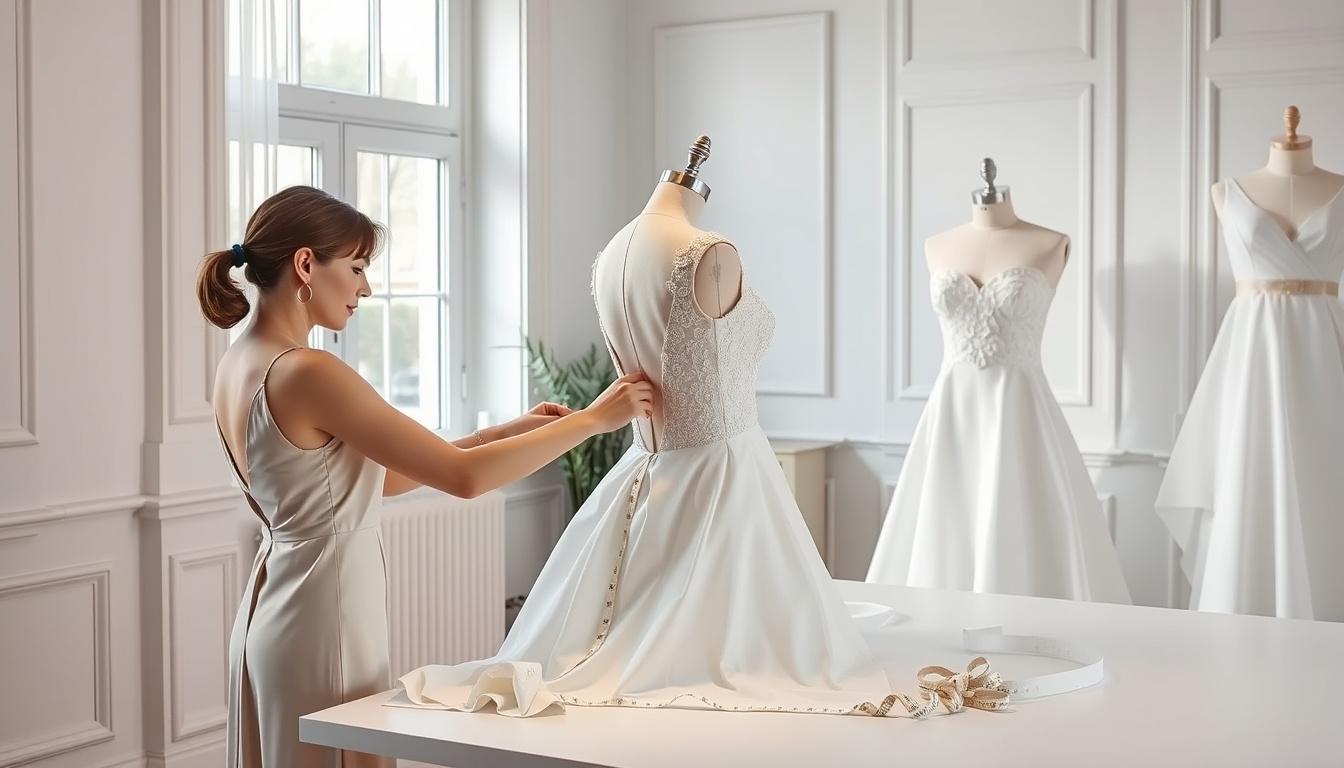
What to Expect From a Bridal Fitting Plan
The process begins with an event date inquiry and a careful review of the garment’s construction. This first assessment helps determine what can be adjusted, what should be left unchanged, and how the work should be scheduled.
Bridal-gown fitting plans usually include two to three appointments. The first fitting establishes the scope, the next fitting checks the progress of the approved alterations, and the final fitting is used for a careful finish before collection.
Clear assessment first, then a staged alteration plan.
For bridal gowns and occasionwear, each fitting is planned around the garment, the fabric, and the event date.
Common work includes hem and train adjustment, bodice and strap refitting, bustle and fastening adjustment, and occasion-dress alterations. Where available, thread and trim are matched to the original garment, but material availability is always confirmed first.
Because fit depends on seam allowances, fabric behavior, and garment construction, no exact outcome is promised before inspection. A realistic completion date and staged quote are provided after the gown has been assessed and the fitting plan is confirmed.